Craft Explore: Block Builder
- 3.5
- Rating
- 10.00M
- Installs
- Free
- Price

 Analysis by App-foxy
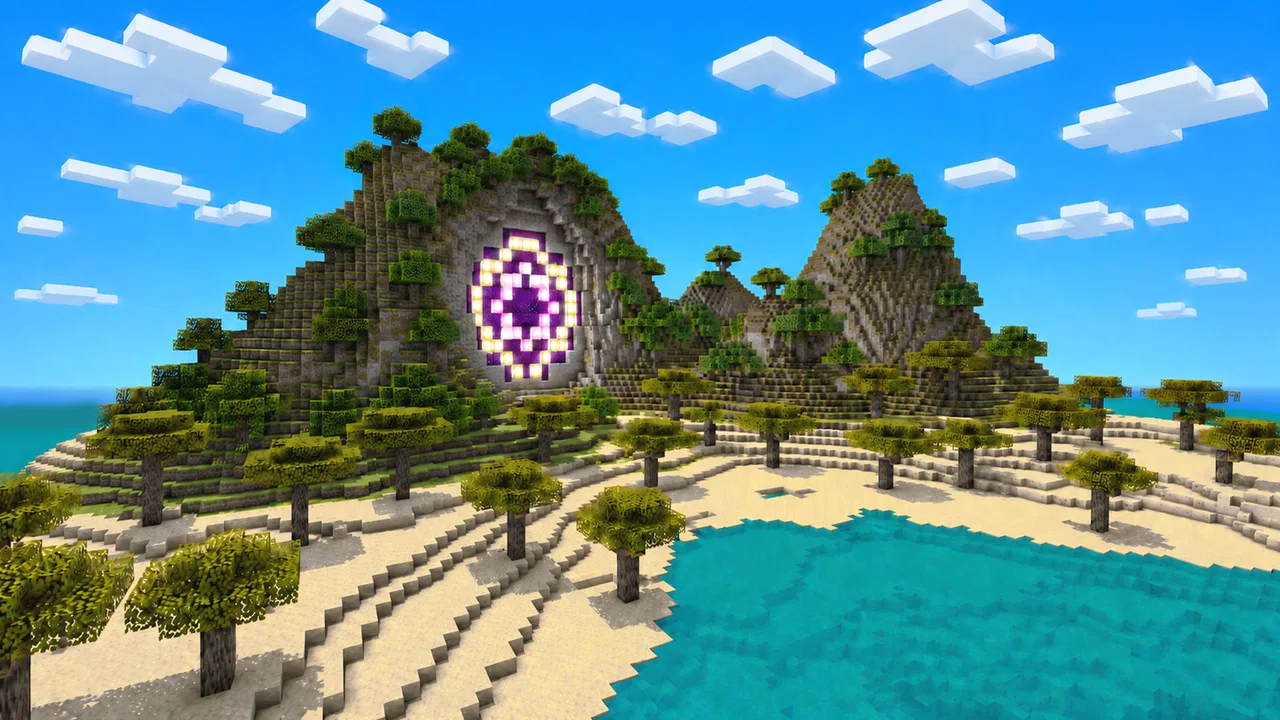
Craft Explore: Block Builder is a free simulation game from Appsgrooves that puts the focus on making and expanding a three-dimensional block world. I approached it as a relaxed building experience rather than a competitive game, and that distinction matters: its appeal comes from arranging space, experimenting with structures, and gradually turning an empty area into something personal. The short store phrase, “Craft Explore,” is simple, but it points toward the game’s central rhythm—create something, look around, and decide what to build next.
My first impression was that this is best understood as a lightweight creative sandbox. It is suitable for players who enjoy construction more than strict objectives, and its Everyone 10+ rating makes it approachable for a broad audience. At the same time, the current build feels like an early stage of a larger idea. The version shown in the store is 0.1.8, so I would not approach it expecting the depth or polish of a long-established block-building alternative. I would approach it because the basic act of shaping a 3D world sounds enjoyable.
How the current version feels to play
The strongest part of the experience is the freedom to work at your own pace. In a typical session, I can imagine opening the game with a small goal—laying out the foundation of a house, marking a path, or creating a compact settlement—and then letting the design grow naturally. That makes it a good fit for short creative breaks. You do not need to commit to a long campaign to get something from it; even a brief session can produce a visible change in the world.
You May Also Like

 Blood Strike: 2.5 Anniversary
Blood Strike’s Loadouts Turn Every Drop Into a Tactical Gamble
A close look at Blood Strike’s custom loadouts: how fast access to signature weapons reshapes its battle royale rhythm, rewards preparation, and narrows the gap between fights.

 Pandora - Music & Podcasts
Pandora’s Music Is Easy to Start, but Harder to Recover
Pandora’s strength is its low-effort path from a seed to a station. Its weak spot is how much confidence it asks you to place in connection, setup, and quiet recovery.

 8 Ball Pool
 Is Built on Rivalries, Rematches, and Routine
A close look at the rivalries, rematches, shared routines, and unanswered safety questions that turn a quick pool match into a persistent mobile community.

 Samsung Music
’s Quiet Strength Is Playing What You Already Own
Its reach comes less from spectacle than from dependable access to a personal library. That simplicity is both the app’s strongest retention engine and its ceiling.

 AccuWeather: Weather Radar
AccuWeather Review: A Quick, Clear Forecast for Everyday Decisions
For everyday plans, the best forecast is the one you can understand quickly. AccuWeather makes rain timing, radar, and local conditions easy to act on, with a few trade-offs.

 Hill Climb Racing
Why Hill Climb Racing Still Turns Crashes Into One More Run
A tiny car, a bumpy hill and one more upgrade: Hill Climb Racing keeps resurfacing because its simple chaos makes every near-miss feel personal.
More From Our News Desk



That flexibility also creates the game’s biggest challenge. A block-building sandbox needs to give players enough direction to prevent the empty world from feeling intimidating. If you already have a design in mind, the open format is liberating. If you are waiting for missions, character progression, or a clear checklist, the experience may feel quiet. I would recommend starting with a practical project instead of trying to build an entire city immediately. A small home with a courtyard, a bridge between two areas, or a themed garden gives the creative tools a purpose.
One useful approach is to build in layers. I would begin by deciding where the main structure sits, then leave open space around it before adding decoration. This prevents the common problem of filling every available area too quickly. In a game centered on blocks, empty space is not wasted space; it gives your next idea somewhere to go. That planning habit is especially valuable for players using a phone, where viewing and editing a large build can become less comfortable than managing a compact one.
The game’s presentation is also important because three-dimensional construction depends on seeing depth clearly. When I judge a builder like this, I pay attention not only to how attractive the blocks look but also to whether the camera and placement process let me understand what I am doing. A visually simple world can still be satisfying if its layout is easy to read. Conversely, a more detailed environment becomes frustrating when placing one block requires repeated corrections. Craft Explore: Block Builder works best when you treat each structure as a small design exercise rather than rushing through construction.
A practical session for new players
If I were introducing the game to a friend, I would suggest a three-step first session. First, choose one landmark that can be recognized from a distance, such as a tower or a large entrance. Second, build a useful structure beside it, giving the area a reason to exist rather than placing isolated objects. Third, walk around the result and identify one unfinished edge that can become the starting point for the next session. This creates continuity without requiring a formal quest system.
That routine also reveals whether the game suits you. Players who enjoy visual planning and gradual improvement will probably find the loop calming. Players who need constant rewards may not. The game does not become more enjoyable simply because a world is large; it becomes enjoyable when each new addition makes the space feel more deliberate.
What the release and version suggest about its direction
The game was released on November 23, 2025, and the current version is 0.1.8. Those details place it in a very early part of its product life. I see that as both an invitation and a warning. An early version can be appealing because the basic building concept has room to develop, but it can also contain rough edges that a mature sandbox has already solved. I would judge it primarily on whether the central construction loop is enjoyable today, not on features I hope may arrive later.
The store positioning is direct: craft, explore, and expand a three-dimensional block world. That tells me the present identity is built around creation rather than a complicated genre blend. I would not assume that the game already offers the extensive survival systems, elaborate automation, deep progression, or broad social features found in more established alternatives. Those are separate expectations, and bringing them into this game without evidence would lead to an unfair comparison.
For existing users, the version number is a reminder to keep expectations practical. A small update can matter greatly in an early project, but I would look for improvements that affect everyday building: smoother placement, clearer interaction feedback, better handling of larger creations, and more dependable movement through a finished structure. These are the changes that determine whether a builder remains pleasant after the novelty of the first world fades.
The developer, Appsgrooves, has positioned the title as a free game, which lowers the barrier to trying it. Its audience is already substantial, with over five million installs, while the average rating sits at 3.2 from around two thousand ratings. I read that combination as a sign of curiosity and mixed satisfaction rather than a guarantee of polish. The rating should not decide everything, but it is a useful reason to test the game personally before investing a lot of time in a large project.
The listing also shows 23 reviews, a much smaller written sample than the overall rating count. That makes individual comments potentially useful for spotting recurring friction, but I would avoid treating a handful of opinions as a complete picture. My own advice is to try a modest build first. If the controls, camera, and placement feel comfortable during that test, the game has a fair chance of becoming a pleasant creative tool for you.
What the current state means for different players
For a child or family member who likes constructing scenes, the age rating of Everyone 10+ makes the game an accessible option to consider. I would still encourage an adult to try it first, especially when deciding whether the pace and interface are suitable for a particular player. The rating describes the intended age range, but it does not tell you whether the building workflow will feel intuitive on your device.
For a player coming from a major block sandbox, the comparison is less favorable if you want a complete ecosystem. Established games often have years of accumulated content, recognizable progression loops, and a large community culture around designs and challenges. Craft Explore: Block Builder is more attractive when you want a simpler starting point and do not need every familiar system immediately. It can serve as a low-commitment creative experiment, but I would not replace a deeper favorite solely because this one is free.
For someone who mainly wants exploration, the title may be more appealing if wandering leads naturally back into construction. Exploration has value here when it supplies inspiration for the next build: a landscape can suggest a bridge, a high point can become a lookout, and an open area can become a settlement. If you prefer exploration with strong discovery rewards, enemies, or a story, you may find the building focus too dominant.
Three building habits that make the game more rewarding
Use landmarks to organize the world. Instead of scattering projects randomly, create a clear center and connect later structures to it. A central plaza, tower, or entrance gives you a visual reference when the world expands. This is more than decoration: it helps you notice whether new buildings belong together and makes unfinished areas feel intentional.
Build for the camera, not only for the ground plan. A structure that looks good from above may feel flat when viewed at street level. I would check every major project from several angles while it is still small. Add height changes, framed entrances, and visible silhouettes before spending time on minor details. This saves effort because correcting the overall shape later is much harder than adjusting it early.
Keep a reserve of open ground. The temptation in a block world is to use every blank patch immediately. I find it more useful to leave room beside a finished build for an extension, a path, or a completely different style. This creates a more believable sense of growth and prevents the world from becoming a crowded collection of unrelated structures.
These habits are especially helpful because a sandbox does not always tell you what a good next step is. They turn a blank map into a series of manageable decisions. They also make the game more suitable for returning players: you can stop after completing one landmark and come back later without forgetting the overall plan.
Where the experience still has room to improve
The main limitation is not that the game chooses simplicity; it is that early simplicity can expose every rough edge. When a title is built around creating a world, the construction tools need to feel dependable. Any uncertainty about selection, movement, camera positioning, or the result of an action can interrupt the creative flow. I would rather have a smaller set of tools that behaves consistently than a large collection of options that requires constant correction.
Another possible point of friction is motivation. A player who enjoys self-directed projects can supply their own goals, but not everyone wants to invent a challenge from nothing. The game would benefit from strong ways to encourage different types of builds without taking away freedom. Even simple prompts, themed objectives, or clearer examples could help a new player move from “I have an empty world” to “I know what I want to try.” I treat that as an area to watch rather than a feature I assume is already present.
Scale is another trade-off. Expanding a world sounds exciting, but larger spaces can make navigation and organization harder. A huge build is not automatically a better build, particularly on a mobile screen. I would keep early projects close enough to revisit easily and expand outward only after the first area has a clear structure. This approach reduces the risk of creating a world that looks impressive in theory but feels inconvenient to use.
The free price is helpful for experimentation, but it also changes how I evaluate the game. Free access makes it reasonable to download, test the controls, and decide whether the creative loop fits your taste. It does not remove the need to judge your time. If you spend hours planning a large world, you should be confident that the current version gives you enough control and comfort to make that investment worthwhile.
I would also skip this game if your priority is a highly competitive experience, a guided narrative, or a mature multiplayer community. The title’s identity is much closer to personal construction and open-ended simulation. Choosing it for the wrong reason will make its quiet, self-directed nature feel like a weakness. Choosing it for the right reason—a desire to shape a small 3D world at your own pace—gives it a fairer chance.
What I would watch as the game evolves
Because the current version is 0.1.8, I would watch for changes that improve the foundation before changes that simply add more content. Better building feedback, more comfortable navigation, and clearer organization would have a direct effect on every session. New blocks or decorative possibilities can be exciting, but they matter less if placing and arranging them remains awkward.
I would also pay attention to how the game handles the transition from a first project to a long-term world. The first hour of a builder is usually easy to understand; the real test comes when players have several structures and need to maintain a coherent layout. Tools that support planning, revisiting, and expanding earlier work would help the game develop a stronger identity beyond its initial novelty.
Finally, I would look for a clearer sense of progression that respects the sandbox format. The best version of this idea would not force every player into the same route. Instead, it would give builders optional reasons to explore new styles, areas, or construction goals. That would make the experience more welcoming to beginners while preserving the freedom that attracts creative players in the first place.
My recommendation after spending time with it
I see Craft Explore: Block Builder as a promising, accessible starting point for players who want a free mobile building game without committing immediately to a larger, more demanding alternative. Its current appeal is straightforward: make a space, shape it with blocks, and gradually turn an empty world into a place that reflects your ideas. The simulation category fits that relaxed, creative focus, and the Everyone 10+ rating keeps its intended audience broad.
My recommendation comes with a clear condition: start small and judge the feel of the tools before designing a massive world. Build one recognizable area, test how comfortably you can move around it, and see whether adding another structure feels satisfying rather than repetitive. That trial will answer the most important practical questions—whether the interface suits you, whether the pace holds your attention, and whether you enjoy setting your own goals.
I would choose a more established block-building game if I wanted a deeper progression system, a large catalogue of proven mechanics, or a community-centered experience. I would choose this one when I wanted a simpler creative space and was comfortable with a product still developing. The mixed average rating suggests that not every player has had the same experience, so I would keep the first project modest rather than assuming the game will replace a long-time favorite.
Overall, Appsgrooves has a clear foundation to build on. The concept is easy to understand, the free entry point makes testing painless, and the open format can support both quick sessions and longer creative projects. The best reason to try it is not the promise of an enormous world, but the satisfaction of making one small area feel like yours. If future updates strengthen the everyday building workflow and give returning players more reasons to continue, this early simulation could become a much more convincing alternative for mobile creators.
FAQs for Craft Explore: Block Builder
01What is Craft Explore: Block Builder?
Craft Explore: Block Builder is a creative sandbox game where players can build and explore vast, blocky worlds. It offers a variety of building materials and tools, allowing for endless possibilities in construction and design. The game is available on both Android and iOS, offering a mobile-friendly experience for creative enthusiasts.
02Is Craft Explore: Block Builder free to play?
Yes, Craft Explore: Block Builder is free to download and play. However, it may offer in-app purchases for additional features, materials, or customization options. These purchases are optional and not necessary to enjoy the core gameplay experience, allowing players to explore and build without any cost.
03Does Craft Explore: Block Builder require an internet connection?
Craft Explore: Block Builder can be played offline, making it a great option for gaming on the go without worrying about data usage. However, some features such as online multiplayer or updates may require an internet connection to access additional content or improvements.
04What age group is Craft Explore: Block Builder suitable for?
Craft Explore: Block Builder is suitable for players of all ages, offering a family-friendly gaming experience. Its intuitive controls and creative focus make it accessible to younger audiences, while the depth of building options can also engage older players looking for a relaxing, creative outlet.
05How does Craft Explore: Block Builder compare to other block-building games?
Craft Explore: Block Builder offers a unique blend of creativity and exploration, similar to other popular block-building games. It stands out with its user-friendly interface and diverse building options. While it shares similarities with games like Minecraft, it provides a distinct experience with its own set of features and community-driven enhancements.
Pros
- Intuitive interface for easy building.
- Rich variety of blocks and items.
- Offline mode available for gameplay.
- Regular updates with new features.
- Supports multiplayer for collaborative play.
Cons
- Occasional lag in high-density areas.
- In-app purchases can be expensive.
- Limited character customization options.
- Ads can be intrusive during gameplay.
- Slow customer support response times.

Craft Explore: Block Builder
Gallery